
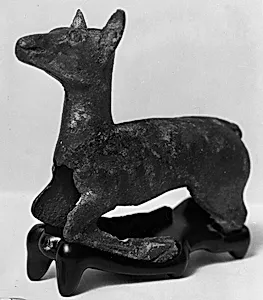
公元前5—4世紀 鹿形青銅車軛飾|Yoke ornament in the shape of a deer
Unknown Artist
5th–4th century BCE
Medium
Bronze
Dimensions
H. 3 1/2 in. (8.9 cm); L. 3 7/8 in. (9.8 cm)
Classification
Sculpture
Culture
China
Department
Asian Art
Museum
Metropolitan Museum of Art, New York, NY
Credit
Gift of George D. Pratt, 1926
Accession Number
28.68.2
Rights
Public Domain
Tags
Art Historical Context
This exquisite bronze yoke ornament, shaped as a leaping deer, dates to China's Warring States period (475–221 BCE a time of intense cultural and technological innovation amid political fragmentation. Crafted around the 5th–4th century BCE, it once adorned the wooden yoke of a chariot or cart, harnessing the power of horses or oxen for elite transport or warfare. Measuring just 3½ inches high and 3⅞ inches long, its compact form belies its dynamic energy, capturing the deer's graceful mid-stride pose with slender legs, arched back, and alert head—hallmarks of Zhou dynasty animal motifs symbolizing speed and vitality. Bronze was the premier medium of ancient Chinese metallurgy, produced via sophisticated piece-mold casting techniques that allowed intricate details like the deer's textured fur, pronged antlers, and subtle muscle tension. These ornaments elevated utilitarian objects into symbols of status, often buried in elite tombs as grave goods, reflecting beliefs in the afterlife journey. Housed in the Metropolitan Museum of Art's Asian Art Department through a 1926 gift from George D. Pratt, this artifact offers a window into the artistry of anonymous craftsmen whose work bridged function and fantasy, blending everyday equestrian life with nature's elegance. Visitors, imagine it gleaming atop a rattling chariot amid ancient battlefields!