
A Crenelated Tower by the Water's Edge
ca. 1650
Classification
Department
Smithsonian Collection
Museum
Smithsonian American Art Museum
Credit
Smithsonian American Art Museum
Accession Number
1957-41-50
Rights
Public Domain
About this artwork
Research in Progress
Art Historical Context
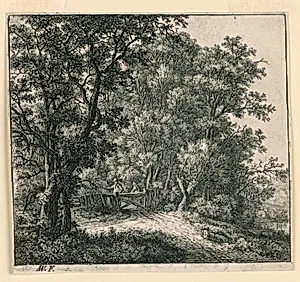
Antoni Waterloo (1618–1677), a Dutch artist of the Golden Age, crafted *A Crenelated Tower the Water's Edge* 1650. This print captures a picturesque landscape featuring a medieval-style crenelated tower—its notched battlements evoking ancient fortifications—perched dramatically at the water's edge. Waterloo, trained in etching and drawing, specialized in evocative scenes of nature, ruins, and architecture, often blending meticulous detail with a sense of serene melancholy. As a product of the Dutch Golden Age, the artwork reflects the era's fascination with the Dutch countryside and historical remnants, amid a booming market for affordable prints. Waterloo's technique, likely etching on paper, allowed for intricate lines that convey texture—from rippling water to weathered stone—making his works accessible to a wide audience beyond oil paintings. His style echoes influences from masters like Rembrandt, emphasizing atmospheric depth and subtle light. Housed in the Smithsonian American Art Museum, this piece highlights the enduring appeal of 17th-century landscape prints, bridging European artistic traditions with American collections. Though research continues, it invites visitors to ponder the timeless romance of towers guarding tranquil shores.