
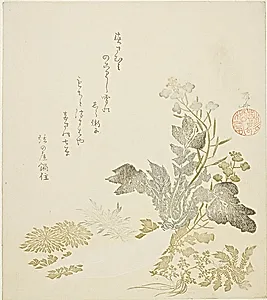
A Giant Radish, Chrysanthemums, and Ferns
About 1820
Medium
Color woodblock print; surimono
Dimensions
21.5 × 19 cm (8 1/2 × 7 1/2 in.)
Classification
woodblock print
Department
Arts of Asia
Museum
Art Institute of Chicago
Accession Number
23525
Rights
Public Domain
About this artwork
This is a specific type of print known as a surimono, which means “something printed.” Prints of this type were produced on thicker paper than standard woodblock prints, and they were never sold—only privately commissioned. As a result, they did not carry the censorship or publisher’s seals required on commercial prints. Surimono were used among small groups of like-minded intellectuals as invitations or announcements and to celebrate the new year or other special events.
Art Historical Context
Welcome to the enchanting world of Japanese surimono at the Art Institute of Chicago. *A Giant Radish,anthemums, and Fern*, created around 1820 by Ryuryukyo Shinsai (1790–1848), is a exquisite color woodblock print measuring just 21.5 × 19 cm. Shinsai, a master of the ukiyo-e tradition during Japan's Edo period (1603–1868), specialized in these intimate, privately commissioned prints, which were far more luxurious than everyday ukiyo-e. Unlike typical ukiyo-e scenes of courtesans or kabuki actors, this still life playfully celebrates nature's bounty: an oversized radish steals the show alongside elegant chrysanthemums—symbols of autumn, longevity, and imperial elegance—and delicate ferns. Surimono like this were often produced for New Year's greetings or poetry gatherings (kyōka circles), blending artistry with seasonal wit. The small scale invited close viewing, fostering a personal connection. Shinsai's genius shines in his precise carving and layering of colors from multiple woodblocks, achieving vibrant hues, subtle textures, and even embossed effects through blind printing. This technique elevated surimono to collector's treasures, preserving fleeting beauty in enduring ink. A delightful glimpse into Edo Japan's refined whimsy!