
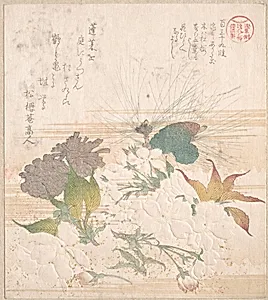
Cherry Blossoms and Pine Cones
19th century
Medium
Woodblock print (surimono); ink and color on paper
Dimensions
8 3/8 x 7 3/8 in. (21.3 x 18.7 cm)
Classification
Prints
Culture
Japan
Department
Asian Art
Museum
Metropolitan Museum of Art, New York, NY
Credit
H. O. Havemeyer Collection, Bequest of Mrs. H. O. Havemeyer, 1929
Accession Number
JP2210
Rights
Public Domain
Tags
Art Historical Context
In the delicate world of 19th-century Japanese surimono—luxurious, privately commissioned woodblock prints—Kubo Shunman's *Cherry Blossoms and Cones* captures nature's poetic harmony. Created during Japan's Edo period (1603–1868), this intimate print (8 3/8 x 7 3/8 in.) showcases Shunman's mastery of ukiyo-e, the "pictures of the floating world" tradition. Surimono like this were often produced for elite patrons, such as New Year's greetings, featuring refined techniques like vibrant inks, subtle color layering, and sometimes metallic pigments for a shimmering effect on paper. Cherry blossoms, or sakura, evoke the fleeting beauty of life—a core theme in Japanese aesthetics, celebrated during hanami festivals—while pine cones symbolize enduring strength and longevity, as pines are revered evergreen icons in East Asian culture. Shunman, a versatile artist known for his poetic motifs and precise carving, balances these elements in a harmonious composition, highlighting transience alongside resilience. Housed in the Metropolitan Museum of Art's Asian Art Department as part of the famed H. O. Havemeyer Collection (bequeathed in 1929), this print exemplifies the refined artistry that bridged Japan's woodblock tradition with personal expression, offering visitors a window into Edo-era elegance.
About the Artist
Kubo Shunman · 1757–1820
Japanese, 1757–1820