
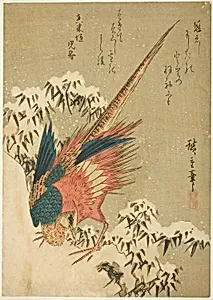
A Golden Pheasant amid Snow-Covered Bamboo on a Steep Hillside
c. 1840
Medium
Color woodblock print; chuban
Dimensions
25 × 17.8 cm (9 7/8 × 7 in.)
Classification
woodblock print
Department
Arts of Asia
Museum
Art Institute of Chicago
Accession Number
26219
Rights
Public Domain
Art Historical Context
Utagawa Hiroshige (1797–1858) created this delicate color woodblock print around 1840 during Japan’s Edo period, when ukiyo-e artists captured fleeting moments of nature with remarkable sensitivity. The scene depicts a golden pheasant perched amid snow-laden bamboo on a steep hillside, evoking the quiet stillness of winter. Hiroshige, celebrated for his landscape and bird-and-flower (kachō-e) subjects, often infused such works with a poetic sense of seasonal change and atmospheric mood. Printed in the compact chuban format measuring roughly 25 by 17.8 centimeters, the work exemplifies the technical sophistication of Japanese woodblock printing. Multiple carved blocks allowed for layered colors and fine details, such as the bird’s vibrant plumage against the pale snow and slender bamboo stalks. These affordable prints brought refined nature imagery into everyday homes, reflecting broader cultural appreciation for the natural world’s quiet drama. Housed in the Art Institute of Chicago’s Arts of Asia collection, this print highlights Hiroshige’s enduring influence on both Japanese art and later Western artists who admired his subtle compositions and harmonious palettes.
About the Artist
Utagawa Hiroshige · 1826–1869
Utagawa Hiroshige (1797–1858), born Andō Tokutarō, was the last great master of Japanese ukiyo-e woodblock printmaking and one of the most influential landscape artists in history. Born in Edo (modern Tokyo) into a low-ranking samurai family serving as fire wardens, Hiroshige transformed landscape printmaking into a poetic meditation on nature, weather, and everyday life. His revolutionary approac...