
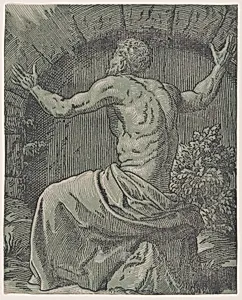
A hermit
16th century
Medium
Chiaroscuro woodcut from two blocks in blue-green ink
Dimensions
Sheet: 9 5/16 × 7 1/2 in. (23.7 × 19 cm)
Classification
Prints
Department
Drawings and Prints
Museum
Metropolitan Museum of Art, New York, NY
Credit
The Elisha Whittelsey Collection, The Elisha Whittelsey Find, 1959
Accession Number
59.570.341
Rights
Public Domain
Tags
Art Historical Context
In the serene world of Renaissance printmaking, *A Hermit* stands out as a masterful chiaroscuro woodcut attributed to the Monogrammist YHS, possibly Baldassare Tommaso Peruzzi a prominent Sienese artist of the early 16th century. around this vibrant period of artistic innovation, the work measures 9 5/16 × 7 1/2 inches and a solitary male figure embodying spiritual contemplation—a common motif symbolizing piety and withdrawal from worldly distractions. The technique is particularly striking: printed from two blocks using blue-green ink, it achieves dramatic light and shadow effects (chiaroscuro) that mimic the tonal modeling of paintings. This innovative method, pioneered in Italy during the Renaissance, elevated woodcuts from mere illustrations to sculptural, painterly objects, rivaling engravings in sophistication. The unusual cool-toned ink adds a mystical, ethereal quality, enhancing the hermit's introspective aura. Housed in the Metropolitan Museum of Art's Drawings and Prints department as part of The Elisha Whittelsey Collection (1959), this print reflects the era's fascination with religious solitude amid humanism's rise. Visitors will appreciate its technical prowess and quiet emotional depth, a window into 16th-century devotional art.