
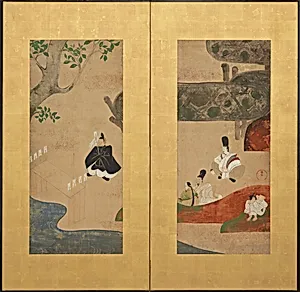
A Shinto ceremony
Classification
Painting
Department
Smithsonian Collection
Museum
Smithsonian American Art Museum
Credit
Gift of Charles Lang Freer
Accession Number
F1905.259
Rights
Public Domain
Tags
About this artwork
To 1905
Art Historical Context
**A Shinto Ceremony** Attributed to the renowned Japanese artist Ogata Kenzan (1663–1743), *A Shinto Ceremony* is a captivating painting from Japan's Edo period (1615–1868), a time of relative peace and cultural refinement under the Tokugawa shogunate. Kenzan, celebrated for his contributions to Japanese art, often blended poetry, ceramics, and painting in works that evoke harmony with nature and tradition. This piece depicts a sacred Shinto ritual, highlighting the indigenous religion's enduring role in Japanese life, where ceremonies honor *kami*—divine spirits inhabiting natural elements. Shinto practices, central to community and seasonal cycles, involved purification rites, offerings, and communal gatherings, as suggested by the title. Created during the Edo era's artistic boom, the painting reflects how visual arts preserved and popularized spiritual customs amid growing urbanization. Though the medium remains unknown, its classification as a painting underscores the period's mastery of ink, color, and composition to convey reverence and transience. Generously gifted to the Smithsonian American Art Museum by collector Charles Lang Freer, whose passion for Asian art shaped major U.S. collections, this work entered the institution around 1905. It invites visitors to ponder Japan's spiritual heritage, bridging centuries of devotion in a single, evocative image. (198 words)