
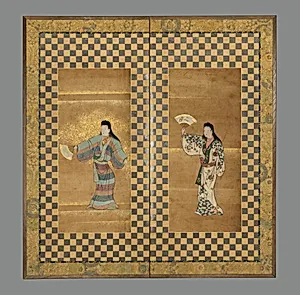
舞伎図屏風|Screen of Two Dancers (Bugi zu byōbu)
18th century
Medium
Two-panel folding screen; ink, color, and gold on paper
Dimensions
Image: 31 5/8 × 14 3/16 in. (80.4 × 36.1 cm) Overall with mounting: 50 13/16 × 68 7/8 in. (129 × 175 cm)
Classification
Paintings
Culture & Period
Japan · Edo period (1615–1868)
Department
Asian Art
Museum
Metropolitan Museum of Art, New York, NY
Credit
Mary and Cheney Cowles Collection, Gift of Mary and Cheney Cowles, 2019
Accession Number
2019.420.18
Rights
Public Domain
Tags
Art Historical Context
Step into the refined world of Edo-period Japan (1615–8) with *Screen of Two DancersBugi zu byōbu)*, a stunning two-panel folding screen from 18th century.ed with ink, color, and gold on paper, this artwork captures two graceful female dancers in mid-performance, their flowing robes and dynamic poses evoking the elegance of traditional Japanese dance. Measuring about 31⅝ × 14¼ inches in the image alone, the screen's luxurious gold ground shimmers like a gilded stage, a hallmark of high-end Japanese decorative arts. Folding screens like this byōbu were prized possessions in wealthy homes, serving as room dividers or backdrops for tea ceremonies and gatherings. During the prosperous Edo era, such pieces celebrated everyday beauty and performing arts, reflecting Japan's vibrant cultural scene where dance—known as *bugi*—held a cherished place in entertainment and ritual. The use of gold leaf not only enhanced visual splendor but also symbolized opulence and the ephemeral nature of life, a subtle nod to deeper philosophical themes. This unidentified masterpiece, now in the Metropolitan Museum of Art's Asian Art collection thanks to the Mary and Cheney Cowles gift, invites you to ponder the poise and artistry of these women dancers, frozen in a moment of timeless harmony.
About the Artist
Unidentified ( ) · –