
Air
1630
Medium
Etching
Dimensions
Sheet: 5 13/16 × 4 5/16 in. (14.7 × 10.9 cm)
Classification
Prints
Department
Drawings and Prints
Museum
Metropolitan Museum of Art, New York, NY
Credit
The Elisha Whittelsey Collection, The Elisha Whittelsey Fund, 1951
Accession Number
51.501.2278
Rights
Public Domain
Tags
Art Historical Context
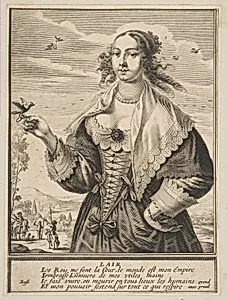
Abraham Bosse's *Air* (1630) is a delicate etching that captures the ethereal essence of its titular element through intricate symbolism. Created during France's Baroque era under Louis XIII, this small print (5 13/16 × 4 5/16 in.) features motifs like soaring birds, graceful horses, and elegant women in portrait-like poses—evoking the windswept freedom of the skies. Likely part of a series personifying the four classical elements, it reflects the period's fascination with allegory and nature's forces, blending portraiture with emblematic storytelling. Bosse, a pioneering French printmaker, mastered etching—a technique using acid to bite designs into metal plates—elevating it from reproductive tool to expressive art form. His precise lines and tonal shading demonstrate his influence on 17th-century graphic arts, as detailed in his own treatises on perspective and engraving. Housed in the Metropolitan Museum of Art's Drawings and Prints department (Elisha Whittelsey Collection), *Air* showcases how prints democratized sophisticated imagery for collectors and scholars alike. This gem invites visitors to ponder air's invisible power, rendered tangible through Bosse's technical virtuosity—a testament to Baroque ingenuity in miniature.
About the Artist
Abraham Bosse · 1602–1676
Abraham Bosse (1604–1676) was a French printmaker and theorist whose approximately 1,600 etchings provide an unparalleled visual record of 17th-century French life. Born to Huguenot parents in Tours, he trained in Paris under Melchior Tavernier and became a devoted follower of Jacques Callot's technical innovations. Bosse's meticulous etchings depicted subjects ranging from daily life and fashion ...