
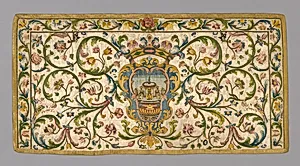
Altar Frontal
18th century
Medium
Silk, satin weave; underlaid with hemp, plain weave; embroidered with silk, gilt-metal-strip-wrapped silk, and and hemp wrapped with gilt-metal strip and silk in satin stitches; laid work and couching; edged with woven tape
Dimensions
103.7 × 202 cm (40 3/4 × 79 1/2 in.)
Classification
textile
Department
Textiles
Museum
Art Institute of Chicago
Accession Number
50471
Rights
Public Domain
Art Historical Context
This exquisite 18th-century Altaral, housed in the Art Institute of's Textiles Department, served as a decorative covering for the front of a church altar during religious services. Measuring an impressive 103.7 202 cm (40 3/4 × 79 1/2 in.), its large scale allowed it to create a dramatic focal point, enhancing the sacred atmosphere with shimmering opulence. Crafted by an unknown artist, such frontals were vital liturgical objects in Christian traditions, symbolizing devotion and the splendor of worship. The frontal's foundation is a luxurious silk satin weave, underlaid with sturdy hemp plain weave for support and durability. It is richly embroidered using silk threads, gilt-metal-strip-wrapped silk, and hemp wrapped with gilt-metal strip and silk. Techniques like satin stitches, laid work, and couching create textured, luminous effects, while woven tape edging provides a refined finish. These methods, common in ecclesiastical embroidery, demanded exceptional skill and highlighted the era's mastery of metallic threads to mimic gold and silver, evoking heavenly radiance. As a testament to 18th-century textile artistry, this piece reflects the cultural importance of embroidered altar cloths in conveying piety and patronage. Though its exact origin remains mysterious, its preservation offers visitors a tactile glimpse into the fusion of craft, faith, and luxury in religious life.
About the Artist
Unknown
The artist designated as "Unknown" in our virtual museum's collection exemplifies a poignant chapter in art history: creators whose identities have faded into obscurity despite the enduring power of their work. With only one known artwork attributed to them in our holdings, this figure represents countless anonymous hands that shaped visual culture across centuries. Museums worldwide, including th...