
Amice
17th century
Medium
Silk, warp-float faced 3:1 broken warp chevron twill weave with supplementary pile warps forming cut solid velvet; appliquéd with warp-float faced 7:1 satin weaves; painted; embroidered with silk, gilt-metal-strip-wrapped silk, and metal wire in split stitches; laid work and couching; edged with braid of silk and gilt-metal-strip-wrapped silk, plain weave with silk, gilt-metal-strip-wrapped silk, plain weave with supplementary patterning wefts and extended weft uncut fringe; with silk and gilt-metal-strip-wrapped silk, square braided, wrapped and knotted cords and silk, gilt-metal-strip-wrapped silk, square braided, wrapped, knotted and fringed tassels worked over cotton core; underlined with linen and sisal, plain weaves; lined with linen, plain weave; glazed
Dimensions
19.7 × 57.2 cm (7 3/4 × 22 1/2 in.)
Classification
textile
Department
Textiles
Museum
Art Institute of Chicago
Accession Number
150578
Rights
Public Domain
Art Historical Context
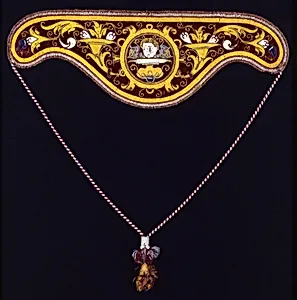
### Amice, 17th Century exquisite 17th-century *Amice*, a liturgical vestment worn by clergy around the neck and shoulders during Catholic Masses, exemplifies the opulent textiles of Baroque-era Europe. Measuring 19.7 × 57.2 cm, it hails from the Art Institute of Chicago's collection. Created by an unknown artisan, the piece reflects the period's emphasis on splendor in religious artifacts, where sumptuous fabrics symbolized divine glory and ecclesiastical prestige. Crafted from silk in a sophisticated warp-float faced 3:1 broken warp chevron twill weave with supplementary pile warps forming cut solid velvet, it features appliquéd warp-float faced 7:1 satin weaves, painting, and intricate embroidery using silk, gilt-metal-strip-wrapped silk, and metal wire. Techniques like split stitches, laid work, and couching add depth and shimmer, while edges boast braids, square-braided cords, knotted tassels over cotton cores, and extended weft fringes. Underlined with linen and sisal, and lined with linen, the glazing finish enhances its luster. Such mastery of weaving, embellishment, and mixed media highlights 17th-century textile innovation, blending Eastern silk influences with Western goldwork traditions. Likely used in high Masses, this amice offers a tactile glimpse into the sensory richness of Baroque worship, where every thread contributed to spiritual theater.
About the Artist
Unknown
The artist designated as "Unknown" in our virtual museum's collection exemplifies a poignant chapter in art history: creators whose identities have faded into obscurity despite the enduring power of their work. With only one known artwork attributed to them in our holdings, this figure represents countless anonymous hands that shaped visual culture across centuries. Museums worldwide, including th...