
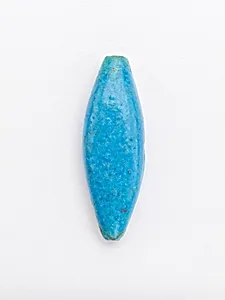
Amulet
1550-1070 BCE
Classification
Jewelry and Ornament
Department
Smithsonian Collection
Museum
Smithsonian American Art Museum
Credit
Gift of Charles Lang Freer
Accession Number
F1907.425
Rights
Public Domain
Tags
About this artwork
To 1907
Art Historical Context
This delicate ceramic amulet hails from ancient Egypt's New Kingdom period (ca. 1550–1070 BCE), a golden age of pharaonic power marked by grand temples, military conquests, and profound spiritual beliefs. Crafted during the 18th to 20th Dynasties, such small ornaments were everyday talismans worn by people of all classes to invoke divine protection against evil spirits, disease, or misfortune. Though the exact form and imagery remain mysterious without further details, amulets like this often featured deities such as Bes or Taweret, embodying the Egyptians' deep faith in the afterlife and magical safeguards. Made from ceramic—a durable, accessible medium for mass production—the amulet exemplifies ancient artisanal techniques, likely involving molding, firing, and glazing for a smooth, vibrant finish. Its classification as jewelry underscores its role not just as adornment but as a portable shield, reflecting the seamless blend of beauty and utility in Egyptian material culture. A cherished piece from the Charles Lang Freer collection, this amulet was gifted to the Smithsonian American Art Museum, tracing its journey from the Nile Valley to modern display by 1907. It offers visitors a tangible link to a civilization obsessed with eternity, reminding us how tiny objects carried immense protective power.
About the Artist
Unknown
The artist designated as "Unknown" in our virtual museum's collection exemplifies a poignant chapter in art history: creators whose identities have faded into obscurity despite the enduring power of their work. With only one known artwork attributed to them in our holdings, this figure represents countless anonymous hands that shaped visual culture across centuries. Museums worldwide, including th...