
Angel
ca. 1760–70
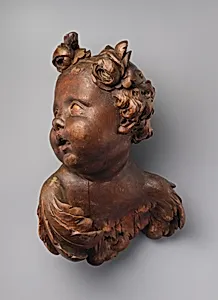
Medium
Lindenwood, traces of gesso
Dimensions
10 1/2 x 7 1/4 in. (26.7 x 18.4cm)
Classification
Sculpture
Culture
Southern German
Department
European Sculpture and Decorative Arts
Museum
Metropolitan Museum of Art, New York, NY
Credit
Gift of J. Pierpont Morgan, 1906
Accession Number
07.225.442b
Rights
Public Domain
Tags
Art Historical Context
This delicate sculpture of an angel, carved by the Bavarian artist Ignaz Günther around 1760–70, exemplifies the graceful spirit of Southern German Rococo art. Günther, one of the leading sculptors of his generation in the region, specialized in expressive religious figures for churches and private devotion. The small scale of this work—roughly ten inches high—suggests it may once have formed part of a larger altarpiece or domestic shrine, where angels served as messengers bridging the earthly and divine realms. Carved from lindenwood, a soft yet fine-grained timber favored by German sculptors for its ability to capture intricate details, the piece retains faint traces of gesso, the traditional ground layer that once supported paint or gilding. This material choice highlights the tactile warmth and luminous quality prized in eighteenth-century ecclesiastical art. Though modest in size, the angel reflects the Rococo emphasis on fluid movement and emotional immediacy, inviting viewers to appreciate both its technical refinement and its role in everyday spiritual life. Now part of the Metropolitan Museum’s distinguished collection of European sculpture, the work entered the museum in 1906 as a gift from J. Pierpont Morgan, underscoring its enduring appeal as a testament to Southern Germany’s rich sculptural heritage.