
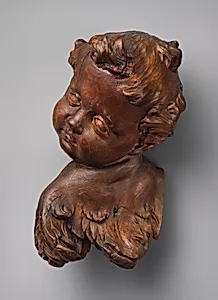
Angel
ca. 1760–70
Medium
Lindenwood, traces of gesso
Dimensions
10 1/2 x 5 1/2 in. (26.7 x 14cm)
Classification
Sculpture
Culture
Southern German
Department
European Sculpture and Decorative Arts
Museum
Metropolitan Museum of Art, New York, NY
Credit
Gift of J. Pierpont Morgan, 1906
Accession Number
07.225.442d
Rights
Public Domain
Tags
Art Historical Context
Ignaz Günther's *Angel*, carved around 1760–70, exemplifies the exuberant Rococo style flourishing in Southern Germany during the late Baroque era. This small lindenwood sculpture, standing just 10½ x 5½ inches, captures the divine grace of an angel in mid-flight, its dynamic pose and flowing drapery evoking spiritual ecstasy. Günther, a master Bavarian sculptor, was renowned for such religious figures destined for church altars and chapels, where they animated sacred spaces with lifelike movement and emotional intensity. Crafted from lindenwood—a soft, fine-grained timber ideal for intricate carving— the figure bears traces of gesso, a preparatory ground for gilding or polychromy that once enhanced its luminous presence. This technique, common in Catholic Europe, bridged sculpture and painting, making heavenly beings appear almost tangible. Housed in the Metropolitan Museum of Art's European Sculpture and Decorative Arts department since J. Pierpont Morgan's 1906 gift, it reflects the era's blend of piety and artistry. Visitors will appreciate how Günther's work embodies Southern German devotional culture, where angels served as intermediaries between earth and heaven, their swirling forms inviting contemplation amid the opulence of Rococo ornamentation.