
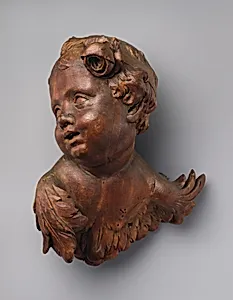
Angel
ca. 1760–70
Medium
Lindenwood, traces of gesso
Dimensions
10 3/4 x 8 in. (27.3 x 20.3cm)
Classification
Sculpture
Culture
Southern German
Department
European Sculpture and Decorative Arts
Museum
Metropolitan Museum of Art, New York, NY
Credit
Gift of J. Pierpont Morgan, 1906
Accession Number
07.225.442e
Rights
Public Domain
Tags
Art Historical Context
Ignaz Günther's *Angel*, carved around 1760–70, exemplifies the exuberant Rococo style flourishing in Southern Germany during the Baroque era. This petite lindenwood sculpture, standing just 10¾ x 8 inches, captures heavenly figure with delicate grace—likely adorned with roses, as suggested by its motifs. Günther, a master Bavarian sculptor based in Munich, specialized in such ethereal wooden angels for church altars and devotional settings, blending spiritual tenderness with playful ornamentation. Crafted from soft lindenwood, ideal for intricate detailing, the figure bears traces of gesso, a preparatory ground for polychrome painting or gilding that enhanced its luminous, otherworldly appeal in candlelit chapels. Günther's technique—fluid drapery, expressive wings, and gentle expressions—elevates religious iconography into joyful celebration, reflecting Bavaria's Catholic piety and artistic patronage amid the Enlightenment. A gift to the Metropolitan Museum of Art from J. Pierpont Morgan in 1906, this *Angel* now graces the European Sculpture and Decorative Arts collection, offering visitors a tangible link to 18th-century Southern German craftsmanship and devotion.