
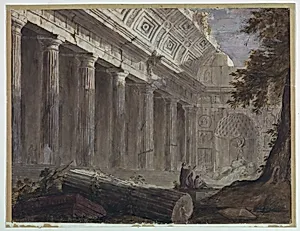
Antique Ruins with Figures Contemplating
Medium
theater
Classification
theater
Department
Smithsonian Collection
Museum
Smithsonian American Art Museum
Credit
Museum purchase through gift of various donors and from Eleanor G. Hewitt Fund
Accession Number
1938-88-218
Rights
Public Domain
About this artwork
Research in Progress
Art Historical Context
Step into the evocative world of 18th-century French theater with *Antique Ruins with Contemplating* by Charles Michel-Angealle (1718–1778). Created between 1742 and 1746, this theater design captures a poignant scene of crumbling classical ruins—reminis of ancient Rome or Greecewhere contemplative figures pause amid the decay. Challe, a versatile Parisian artist known for his architectural and stagecraft, master blends dramatic perspective and atmospheric to evoke melancholy and wonder. As a medium classified within theater arts, this work likely served as a scenic backdrop or set design for opera or ballet performances, a hallmark of the Rococo era's opulent spectacles at venues like the Paris Opéra. During the Enlightenment, such depictions of ruins symbolized the passage of time and humanity's fleeting glory, resonating with audiences fascinated by classical antiquity through Grand Tour travelogues and archaeological rediscoveries. Challe's intricate gouache techniques would have brought these illusions to life on stage, transforming static canvas into immersive environments. Today, housed in the Smithsonian American Art Museum through a generous museum purchase, this piece highlights the intersection of fine art and performance. Though research continues, it invites us to ponder: What stories unfolded before these ruins under the glow of footlights? A testament to Challe's ingenuity, it bridges art history and theater's magic.