
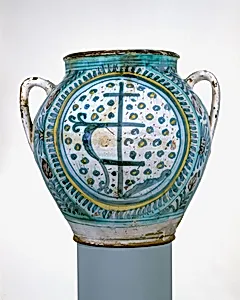
Apothecary jar (orciuolo)
Unknown Artist
second half 15th century
Medium
Maiolica (tin-glazed earthenware)
Dimensions
Height: 11 3/16 in. (28.4cm)
Classification
Ceramics-Pottery
Culture
Italian, probably Tuscany
Department
Robert Lehman Collection
Museum
Metropolitan Museum of Art, New York, NY
Credit
Robert Lehman Collection, 1975
Accession Number
1975.1.999
Rights
Public Domain
Art Historical Context
This elegant apothecary jar, known as an *orciuolo*, hails from Italy—likely Tuscany—in the second half of the15th century, a golden age of Renaissance craftsmanship. Standing at just over 11 inches tall, it was designed to store medicines or ingredients in pharmacies, reflecting the era's growing interest in pharmacology and herbal remedies inspired by ancient texts and emerging scientific inquiry. Part of the renowned Robert Lehman Collection at The Metropolitan Museum of Art, tin-glazed earthenware piece exemplifies everyday functional art from the period. Maiolica, the jar's medium, revolutionized ceramics in Renaissance Italy. Artisans applied a tin-based glaze over earthenware, creating a smooth, white surface ideal for vibrant polychrome decoration—often including botanical motifs, inscriptions, or pharmacy symbols that identified contents like syrups or powders. This technique, perfected in Tuscan workshops, allowed for luminous colors and fine details that mimicked luxury goods like metalwork or glass, making even utilitarian objects objects of beauty. Culturally, such jars bridge art and medicine, highlighting Tuscany's role as a hub of innovation during the 1400s. They offer a glimpse into Renaissance daily life, where apothecaries were respected healers blending art, science, and commerce. Today, this survivor from the past invites us to appreciate the artistry in the ordinary.