
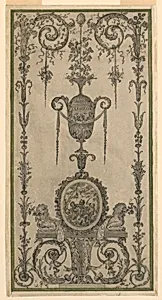
Arabesque Design for a Panel
1780–90
Classification
ornament
Department
Smithsonian Collection
Museum
Smithsonian American Art Museum
Credit
Purchased for the Museum by the Advisory Council
Accession Number
1908-26-131
Rights
Public Domain
About this artwork
Research in Progress
Art Historical Context
**Arabesque Design for a** *Unknown artist, 1780–90* *Smithsonian American Art Museum* delicate *Arabesque Design for a*, created between 1780 and 1790, exemplifies the ornate decorative arts of the late 18th century. Arabesque patterns, characterized by flowing, interlacing vines, foliage, and fantastical motifs, originated in Islamic art but gained widespread popularity in Europe and America during the Rococo and early Neoclassical periods. Likely intended for a wall panel, furniture, or textile, this design reflects the era's fascination with elegant ornamentation, blending exotic influences with refined craftsmanship to adorn interiors of fashionable homes. Though the medium remains unidentified amid ongoing research, such designs were typically rendered in ink, gouache, or watercolor on paper, serving as templates for artisans. Acquired by the Smithsonian American Art Museum through the Advisory Council's purchase, it highlights the museum's commitment to preserving ephemeral works that shaped American visual culture. In a time of revolutionary change, these patterns offered a sense of graceful continuity, evoking gardens of paradise and symbolizing harmony. Visitors will appreciate how this piece captures the interplay of global styles in early American design, inviting us to imagine it brought to life in vibrant silks or carved wood. (198 words)
About the Artist
Unknown
The artist designated as "Unknown" in our virtual museum's collection exemplifies a poignant chapter in art history: creators whose identities have faded into obscurity despite the enduring power of their work. With only one known artwork attributed to them in our holdings, this figure represents countless anonymous hands that shaped visual culture across centuries. Museums worldwide, including th...