
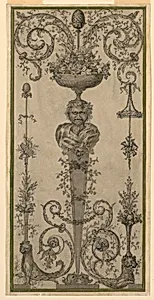
Arabesque Design for a Panel
ca. 1775
Classification
ornament
Department
Smithsonian Collection
Museum
Smithsonian American Art Museum
Credit
Purchased for the Museum by the Advisory Council
Accession Number
1908-26-132
Rights
Public Domain
About this artwork
Research in Progress
Art Historical Context
**Arabesque Design for a** *ca. 1775, Unknown artist* *Smithsonian American Art Museum* delicate *Arabesque Design for a Panel*, created around 1775, exemplifies the ornamental elegance of late colonial America. Arabesques—intricate, flowing patterns of foliage, vines, and scrolls—were a hallmark of18th-century decorative arts drawing from European influences like Rococo and Baroque styles. Intended for a panel, this artwork likely served as a blueprint for embellishing furniture, wall paneling, or architectural elements, reflecting the aspirations of a burgeoning American elite amid the Revolutionary era. Though the artist remains unknown and research continues, the design's survival highlights the craftsmanship of the period. Purchased for the Smithsonian American Art Museum by the Advisory Council, it joins a collection celebrating American ingenuity. Arabesques symbolized harmony and abundance, bridging Old World sophistication with New World innovation, and offered a whimsical escape in domestic spaces. Today, this piece invites us to appreciate the unsung artistry behind everyday luxury, reminding visitors of how patterns shaped colonial identity. (178 words)
About the Artist
Unknown
The artist designated as "Unknown" in our virtual museum's collection exemplifies a poignant chapter in art history: creators whose identities have faded into obscurity despite the enduring power of their work. With only one known artwork attributed to them in our holdings, this figure represents countless anonymous hands that shaped visual culture across centuries. Museums worldwide, including th...