
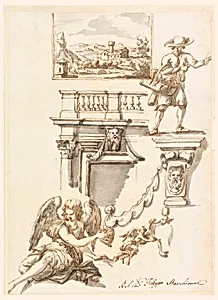
Architecture and Figure Studies
Classification
architecture
Department
Smithsonian Collection
Museum
Smithsonian American Art Museum
Credit
Museum purchase through gift of various donors
Accession Number
1901-39-650
Rights
Public Domain
About this artwork
Research in Progress
Art Historical Context
Filippo Marchionni (2–1805), a prominent Italian architect of the late 18th century, created *Architecture and Figure Studies* between 1750 and 1790. Working primarily in Rome during the transition from Rococo elegance to Neoclassical restraint, Marchionni designed theaters, palaces, and urban projects that blended classical harmony with practical innovation. This artwork, classified as architecture within the Smithsonian American Art Museum collection, likely consists of preparatory sketches—common tools for architects to explore proportions, spatial relationships, and human scale in their designs. Such studies were essential in an era when architects revived ancient Roman and Greek ideals, emphasizing symmetry and grandeur amid Europe's Enlightenment fervor. By integrating figure studies with architectural elements, Marchionni would have tested how people interact with built environments, a technique rooted in Renaissance traditions but refined for neoclassical precision. Though the medium remains unidentified amid ongoing research, these drawings offer a window into the meticulous process behind Italy's architectural legacy. Acquired through museum purchase with gifts from various donors, this piece invites visitors to appreciate the artistry behind the monuments. It reminds us that great architecture begins with thoughtful sketches, bridging human imagination and stone reality.