
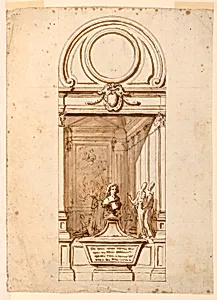
Design for a Sepulchral Monument
ca. 1675
Classification
Drawing
Department
Smithsonian Collection
Museum
Smithsonian American Art Museum
Credit
Museum purchase through gift of various donors and from Eleanor G. Hewitt Fund
Accession Number
1938-88-2575
Rights
Public Domain
About this artwork
Research in Progress
Art Historical Context
Antonio Gherardi's *Design for a Sepulral Monument* (ca. 1675) is a captivating preparatory drawing from the height of the Italian Baroque era. Born in 1644, Gherardi was a Roman architect, sculptor, and painter renowned for his dynamic frescoes and architectural projects, including work at the Vatican and Santa Maria Maggiore. This piece, housed in the Smithsonian American Art Museum, exemplifies his skill in conceptualizing grand funerary architecture—elaborate tombs designed to evoke awe, eternity, and spiritual drama for nobility or clergy. As a drawing—its exact medium yet under study—the work highlights the Baroque emphasis on movement, theatricality, and illusionistic depth. Such designs were blueprints for monumental sculptures blending architecture with figurative elements, often featuring draped figures, urns, and soaring obelisks to symbolize resurrection and divine glory. Created amid Rome's Counter-Reformation fervor, it reflects how art served both religious propaganda and aristocratic legacy. Acquired through museum purchase and the Eleanor G. Hewitt Fund, this artifact bridges European Baroque mastery with American collections, inviting us to ponder mortality through Gherardi's visionary lines. Though research continues, it stands as a window into 17th-century design ingenuity.