
Arita-ware Kakiemon Octagonal Dish
19th–early 20th century
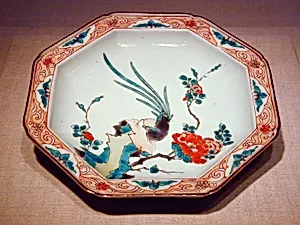
Medium
Porcelain with enamel decoration
Dimensions
4.9 × 22.2 cm (1 15/16 × 8 3/4 in.)
Classification
dish (vessel)
Department
Arts of Asia
Museum
Art Institute of Chicago
Accession Number
18412
Rights
Public Domain
Art Historical Context
This elegant Arita-ware Kakiemon octagonal, crafted in Japan during the 19th to early 20th century exemplifies the enduring legacy of one of Asia's premier porcelain traditions. Measuring just 4.9 × 22.2 cm, its shallow, eight-sided form makes it a versatile serving vessel, perfect for displaying delicacies or as a decorative centerpiece. The medium—fine porcelain adorned with vibrant enamel decoration—highlights the technical mastery of Arita kilns in Saga Prefecture, where potters achieved a signature milky-white body prized for its purity and translucency. Kakiemon style, originating in the 17th century and named after innovator Sakaida Kakiemon, revolutionized Japanese porcelain with overglaze enamels in soft iron-reds, blues, and greens. These asymmetrical designs often featured birds, flowers, and foliage in a sparse, naturalistic motif, blending Zen-inspired minimalism with European export appeal. By the 19th century, as Japan opened to global trade, such pieces flooded Western markets, influencing designers like those at Meissen. Housed in the Art Institute of Chicago's Arts of Asia department, this anonymous masterpiece invites us to appreciate the cultural bridge between East and West. Its delicate enamels, fired at high temperatures for lasting brilliance, remind visitors of porcelain's role as both everyday luxury and artistic diplomacy.
About the Artist
Unknown
The artist designated as "Unknown" in our virtual museum's collection exemplifies a poignant chapter in art history: creators whose identities have faded into obscurity despite the enduring power of their work. With only one known artwork attributed to them in our holdings, this figure represents countless anonymous hands that shaped visual culture across centuries. Museums worldwide, including th...