
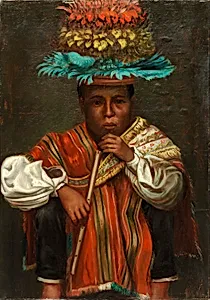
Aymara Boy
ca. 1890-1892
Medium
Painting
Classification
Painting
Department
Smithsonian Collection
Museum
Smithsonian American Art Museum
Credit
Smithsonian American Art Museum, Museum purchase
Accession Number
1985.66.164,665
Rights
Public Domain
Tags
Art Historical Context
**Aymara Boy** (ca. 1890-1892) is a captivating painting from the Smithsonian American Art Museum's collection, acquired through museum purchase. Created by an unidentified artist, possibly South American, this work depicts a young Aymara child, offering a poignant glimpse into indigenous life during the late 19th century. The Aymara people, native to the Andean highlands of present-day Bolivia, Peru, and Chile, have long thrived in high-altitude environments, maintaining rich cultural traditions amid colonial influences and emerging national identities. As a painting classified within the Smithsonian's holdings, it exemplifies the era's growing fascination with ethnographic portraiture, where artists documented diverse peoples with sensitivity or curiosity. Though the specific techniques remain undocumented, the choice of oil or similar medium on canvas would have allowed for detailed rendering of the boy's features, clothing, and expression—hallmarks of portraiture that humanize subjects often overlooked in Western art narratives. This piece holds cultural significance today, preserving a moment of Aymara childhood amid rapid societal changes. Displayed in the Smithsonian American Art Museum, it invites visitors to reflect on indigenous resilience and the artistry of underrepresented voices from South America. (198 words)