
Bacchanale
1610–42
Medium
Etching
Dimensions
Sheet: 2 1/2 x 6 9/16 in. (6.4 x 16.6cm)
Classification
Prints
Department
Drawings and Prints
Museum
Metropolitan Museum of Art, New York, NY
Credit
Harris Brisbane Dick Fund, 1928
Accession Number
28.28.4
Rights
Public Domain
Tags
Art Historical Context
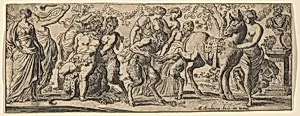
Pierre Breiette’s *Bacchan* is a compact lively etching created between 0 and 1642. The small sheet, measuring just 2½ by 6⅝ inches, depicts a festive procession featuring the Roman god Bacchus amid men, women, centaurs, and horses. Through fluid lines and animated groupings, Brebiette captures exuberant spirit of classical mythology in a format suited for intimate viewing or inclusion in albums. As an etching, the work reflects the growing popularity of printmaking in-century Europe. The medium allowed artists to reproduce intricate designs affordably, spreading images of ancient myths beyond palace walls to wider audiences. Brebiette’s delicate handling of the copper plate conveys both the energy of the revelers and the graceful forms of the hybrid centaurs. Acquired by the Metropolitan Museum in 1928 through the Harris Brisbane Dick Fund, this print now resides in the Department of Drawings and Prints. Its modest size invites close looking, rewarding viewers with the timeless appeal of Bacchic celebration rendered in crisp, economical strokes.
About the Artist
Pierre Brebiette · 1598–1642
Pierre Brébiette (c. 1598–c. 1642) was a French painter and etcher whose elegant, sensuous treatment of classical mythology and allegory earned him a significant reputation in early seventeenth-century Paris. Born in Mantes-sur-Seine, Brébiette traveled to Italy as a young man and lived and worked in Rome from around 1617 to approximately 1625, absorbing the influences of ancient sculpture, Renais...