
Triumph of Bacchus
17th century
Classification
Prints
Department
Drawings and Prints
Museum
Metropolitan Museum of Art, New York, NY
Credit
Harris Brisbane Dick Fund, 1928
Accession Number
28.91.25
Rights
Public Domain
Tags
Art Historical Context
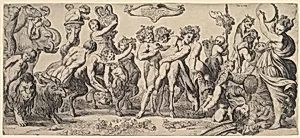
Step into the exuberant world of 17th-century French printmaking with *Triumph of Bacchus* Pierre Brebiette, captivating engraving now housed in the Metropolitan Museum Art's Drawings and Prints. Created during the Baroque era's love affair with mythological revelry, this work captures the Roman god of wine, Bacchus (Dionysus to the Greeks), in a grand procession symbolizing ecstasy, abundance, and uninhibited joy. Acquired through the Harris Brisbane Dick Fund 1928, it the period's fascination with classical antiquity, blending pagan myths with the era's dramatic flair. The scene bursts with dynamic energy: Bacchus at the center, surrounded by merry drinkers, mythical centaurs, fierce lions, and other beasts in a chaotic yet harmonious triumph. These tags—animals, centaurs, Bacchus, drinking—highlight Brebiette's skill in evoking the wild, transformative power of wine, a theme echoing ancient Roman triumphs and Renaissance festivals. As a print, it allowed wide dissemination of such vivid imagery, making elite art accessible to collectors and inspiring tavern decorations across Europe. Brebiette, a masterful engraver, employs intricate line work to convey motion and texture, from flowing drapery to snarling lions, showcasing the technical precision of 17th-century intaglio techniques. This piece not only reflects France's artistic shift toward opulent narratives but invites us to ponder the timeless allure of indulgence and myth.
About the Artist
Pierre Brebiette · 1598–1642
Pierre Brébiette (c. 1598–c. 1642) was a French painter and etcher whose elegant, sensuous treatment of classical mythology and allegory earned him a significant reputation in early seventeenth-century Paris. Born in Mantes-sur-Seine, Brébiette traveled to Italy as a young man and lived and worked in Rome from around 1617 to approximately 1625, absorbing the influences of ancient sculpture, Renais...