
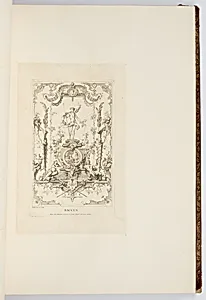
BACCUS
Classification
Bound print
Department
Smithsonian Collection
Museum
Smithsonian American Art Museum
Credit
Purchased for the Museum by the Advisory Council
Accession Number
1921-6-224-9
Rights
Public Domain
About this artwork
Research in Progress
Art Historical Context
Claude Gillot, a prominent French artist (1673–1722), was a key figure in the transition from Baroque to Rococo styles, renowned for his lively depictions of mythology, theater, and festive scenes. Though Gillot passed away in 1722, *Baccus*—likely portraying the Roman god of wine in exuberant revelry—was produced posthumously between 1729 and 1737 as a bound print. This classification suggests it formed part of an illustrated volume or album, a common format for disseminating designs by masters like Gillot to a wider audience during the opulent 18th-century print market. Gillot's influence extended to pupils like Antoine Watteau, and his works often captured the playful, theatrical spirit of *commedia dell'arte* and classical myths, blending intricate line work with vibrant imagination. As a bound print, *Baccus* exemplifies how prints preserved and popularized an artist's legacy, making high art accessible beyond paintings. Acquired by the Smithsonian American Art Museum through its Advisory Council, this piece highlights cross-cultural exchanges in collecting, bridging French elegance with American institutions. Ongoing research promises deeper insights, but *Baccus* invites us to toast Gillot's enduring joy in mythological mischief. (198 words)