
Bag
Unknown Artist
mid-18th century
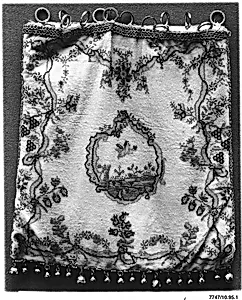
Medium
Glass and steel beads, kidskin, silk
Dimensions
L. 8 1/2 inches (21.6 cm)
Classification
Textiles-Embroidered
Culture
French
Department
European Sculpture and Decorative Arts
Museum
Metropolitan Museum of Art, New York, NY
Credit
Gift of Mrs. Edward Luckemeyer, 1910
Accession Number
10.95.1
Rights
Public Domain
Tags
Art Historical Context
This exquisite mid-18th-century bag, crafted from glass and steel beads embroidered on kidskin and silk, exemplifies the opulent craftsmanship of the Rococo era. Measuring just 8½ inches long, it served as a fashionable accessory—likely a reticule for evening wear—carried by elegant ladies at Versailles or Parisian salons. The intricate beadwork, shimmering with metallic steel and translucent glass, creates a luxurious texture, highlighting the technical virtuosity of anonymous French artisans who blended textile embroidery with jewelry-like embellishment. Adorned with motifs of grapes and flowers, the bag reflects the period's delight in nature-inspired abundance, evoking the lush gardens and bountiful still lifes popular under Louis XV. Such items were not mere utilities but status symbols, showcasing wealth through imported materials like fine kidskin leather and silk. Bead embroidery techniques allowed for three-dimensional effects, making the bag a wearable work of art that captured light and movement. Now housed in the Metropolitan Museum of Art's European Sculpture and Decorative Arts Department, this delicate treasure—gifted in 1910 by Mrs. Edward Luckemeyer—offers a glimpse into 18th-century French femininity and fashion's artistry. Visitors can appreciate how everyday objects became canvases for exuberant creativity.