
Bag
Unknown Artist
15th–16th century
Medium
Cotton
Dimensions
H. 25 in. × W. 23 1/2 in. (63.5 × 59.7 cm)
Classification
Textiles-Woven
Culture
Inca
Department
Arts of Africa, Oceania, and the Americas
Museum
Metropolitan Museum of Art, New York, NY
Credit
Gift of Henry G. Marquand, 1882
Accession Number
82.1.3
Rights
Public Domain
Art Historical Context
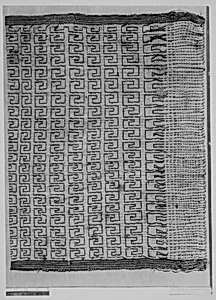
This striking Inca bag, woven from cotton in the 15th–16th century, exemplifies the of Andean textile arts during the height of the Inca Empire. 25 by 23½ inches, it served as a practical vessel for carrying goods, coca leaves, or ritual items, reflecting the Incas' integration of beauty and utility in everyday objects. Produced in what is now Peru, such bags were crafted on back-strap looms by skilled weavers, often women, using locally cultivated cotton fibers dyed with natural pigments. Inca textiles held profound cultural significance, functioning as currency, tribute payments, and symbols of status and cosmology. The woven structure highlights advanced techniques like supplementary weft patterning, which allowed for intricate designs—though specifics here are subtle, they echo the geometric motifs and repeating motifs typical of Inca work, conveying social hierarchies and spiritual beliefs. This bag captures a golden age of pre-Columbian craftsmanship, just before Spanish conquest disrupted these traditions. Now in the Metropolitan Museum of Art's Department of the Arts of Africa, Oceania, and the Americas—thanks to a gift from Henry G. Marquand in 1882—it invites us to appreciate the Incas' enduring legacy in fiber arts, where thread wove stories of empire and ingenuity.