
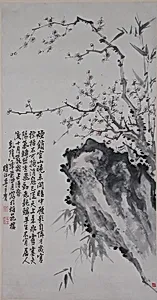
清 李方膺 梅竹石圖 軸|Bamboo, plum, and rock
dated 1743
Medium
Hanging scroll; ink and color on paper
Dimensions
Image: 44 7/8 x 23 3/8 in. (114 x 59.4 cm) Overall with mounting: 99 1/2 x 29 5/8 in. (252.7 x 75.2 cm) Overall with rollers: 99 1/2 x 33 1/4 in. (252.7 x 84.5 cm)
Classification
Paintings
Culture & Period
China · Qing dynasty (1644–1911)
Department
Asian Art
Museum
Metropolitan Museum of Art, New York, NY
Credit
From the P. Y. and Kinmay W. Tang Family Collection, Gift of Professor Wen Fong, 1971
Accession Number
1971.256
Rights
Public Domain
Tags
Art Historical Context
Li Fangying's *Bamboo, Plum, and Rock* (1743) is a captivating hanging scroll from China's Qing dynasty (1644–1911), executed in ink and color on paper. Measuring nearly 45 by 23 inches in its image alone, this monumental work exemplifies the literati painting tradition, where scholars like Li (1695–1754) expressed personal ideals through nature. Housed in the Metropolitan Museum of Art's Asian Art Department, it comes from the esteemed P. Y. and Kinmay W. Tang Family Collection. The composition features the enduring motif of plum blossoms, bamboo, and rock—symbols of resilience, integrity, and purity in Chinese culture. Plum blossoms endure winter's harshness, bamboo bends without breaking, and jagged rocks evoke steadfastness. Dating to 1743, the painting reflects Qing-era scholarly values amid a prosperous yet politically complex dynasty, where artists drew inspiration from Song and Yuan masters while infusing personal flair. Li Fangying, known for his bold "wild" brushwork associated with the Yangzhou school, brings dynamic energy to these timeless subjects. As a hanging scroll, it was designed for intimate contemplation, unrolled for special occasions. The subtle use of color enhances the ink's vitality, inviting viewers to ponder nature's quiet strength—a perfect emblem of Chinese artistic philosophy.