
Band
Qing dynasty (1644–1911), 1875/1900
Medium
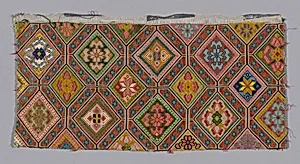
Forty-four pairs and eight odd pieces of embroidered sleeve, ankle bands, etc. on gauze.
Dimensions
14.2 × 28.5 cm (5 5/8 × 11 3/16 in.)
Classification
costume - embroidery
Department
Textiles
Museum
Art Institute of Chicago
Accession Number
156168
Rights
Public Domain
Art Historical Context
### Band, Qing Dynasty (1875/1900) This delicate ensemble, titled *Band*, hails from China's Qing dynasty (1644–1), specifically the late 19th century crafted by Han Chinese artisans. Comprising forty-four pairs and eight individual pieces of embroidered sleeve bands ankle bands, and similar accessories mounted on translucent gauze, it measures a compact 14.2 × 28.5 cm (5⅝ × 11¼ in.). Housed in the Art Institute of Chicago's Textiles Department classified as costume embroidery, items exemplify the exquisite craftsmanship of traditional Chinese garment adornments. In the Qing era, a time of imperial splendor blending Manchu and Han influences, such embroidered bands were integral to everyday and ceremonial attire, often securing sleeves or ankles for practicality and decoration. The use of fine gauze as a backing highlights the era's advanced textile techniques, allowing intricate embroidery to shimmer through sheer fabric, enhancing visual depth and elegance. These pieces showcase the Han Chinese mastery of embroidery—a revered art form symbolizing cultural continuity and skill. Motifs likely drawn from nature or auspicious symbols reflect deeper values of harmony and protection, offering visitors a tangible glimpse into late imperial life and the artistry that adorned its people.
About the Artist
Han-Chinese
**Han-Chinese** was the collective attribution given to anonymous artisans of Han Chinese descent who crafted intricate embroidered textiles during the Qing dynasty (1644–1911). These makers, active primarily in the late 18th to early 20th centuries, specialized in luxurious garments and furnishings that showcased the pinnacle of Han Chinese needlework traditions. Their early lives and individual ...