
Panel
Qing dynasty (1644–1911), 1875/1900
Medium
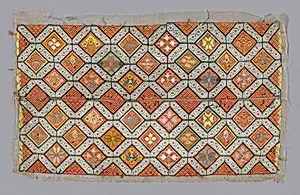
embroidered gauze
Dimensions
21.5 × 34.6 cm (8 1/2 × 13 5/8 in.)
Classification
embroidery
Department
Textiles
Museum
Art Institute of Chicago
Accession Number
156159
Rights
Public Domain
Art Historical Context
Step into the refined world of Qing dynasty textiles with this *Panel*, crafted by Han Chinese artisans around 1875–1900. Measuring a modest 21.5 × 34.6 cm, this embroidered gauze piece exemplifies the pinnacle of imperial Chinese needlework during the dynasty's final decades (1644–1911). Gauze, a sheer and lightweight silk fabric, served as an ideal canvas for intricate embroidery, allowing light to play through its translucent layers and highlighting the skill of its makers. In the Qing era, Han Chinese embroiderers drew on centuries-old traditions while adapting to Manchu court influences, producing textiles that adorned garments, screens, and furnishings for the elite. This panel's survival speaks to the era's opulent material culture, where embroidery was not just decorative but a symbol of cultural sophistication and technical mastery. Techniques like satin stitch or Peking stitch—common in the period—would have created vivid patterns, though the exact motifs remain a tantalizing mystery preserved in the Art Institute of Chicago's Textiles collection. Today, this artwork invites us to appreciate the artistry of everyday luxury in imperial China, reminding visitors of a time when every thread told a story of heritage and precision.
About the Artist
Han-Chinese
**Han-Chinese** was the collective attribution given to anonymous artisans of Han Chinese descent who crafted intricate embroidered textiles during the Qing dynasty (1644–1911). These makers, active primarily in the late 18th to early 20th centuries, specialized in luxurious garments and furnishings that showcased the pinnacle of Han Chinese needlework traditions. Their early lives and individual ...