
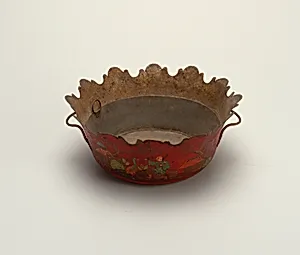
Basket liner
ca. 1770
Classification
metalwork
Department
Smithsonian Collection
Museum
Smithsonian American Art Museum
Credit
Gift of Mrs. J. Insely Blair
Accession Number
1942-81-2-a,b
Rights
Public Domain
About this artwork
Research in Progress
Art Historical Context
### Basket Liner, ca. 1770 This delicate "Basket Liner," dating to around 1770, hails from the pre-Revolutionary era in America, a time when artisans crafted everyday objects that blended functionality with subtle elegance. Classified as metalwork from the Smithsonian American Art Museum's collection, it likely served as a protective or decorative insert for a serving basket—perhaps for bread, fruit, or linens—allowing air circulation while shielding delicate fabrics. Such items were staples in colonial households, reflecting the resourcefulness of American craftsmen adapting European styles to local materials and tastes. Though the artist and exact medium remain unknown amid ongoing research, the piece exemplifies early American metalworking traditions. Artisans often employed techniques like piercing, chasing, or repoussé to create intricate patterns, turning humble utensils into heirlooms. Donated as a gift from Mrs. J. Insley Blair, it underscores the value placed on preserving these anonymous treasures, offering a window into 18th-century domestic life and the unsung artistry that furnished early American homes. (178 words)
About the Artist
Unknown
The artist designated as "Unknown" in our virtual museum's collection exemplifies a poignant chapter in art history: creators whose identities have faded into obscurity despite the enduring power of their work. With only one known artwork attributed to them in our holdings, this figure represents countless anonymous hands that shaped visual culture across centuries. Museums worldwide, including th...