
Bead, hexagonal
1st-2nd century
Classification
Jewelry and Ornament
Department
Smithsonian Collection
Museum
Smithsonian American Art Museum
Credit
Gift of Charles Lang Freer
Accession Number
F1909.802
Rights
Public Domain
Tags
About this artwork
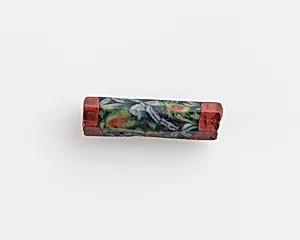
Columnar rod and plate mosaic. Floral pattern in green, white and red in an opaque dark-blue matrix; ends banded in red.
Art Historical Context
This exquisite hexagonal bead, dating to the 1st-2nd century during Egypt's Roman Period (30 BCE–395 CE), the ancient artistry of mosaic glass. Crafted using the intricate columnar rod and plate technique it features a vibrant floral pattern in green, white, and red set against an opaque dark-blue matrix, with striking red bands at the ends This method involved bundling colorful glass rods and slices, fusing them, and slicing into beads—mimicking precious stones like agate or lapis lazuli at a fraction of the cost. In Roman-era Egypt, such beads were prized components of jewelry and ornaments, reflecting the fusion of Egyptian glassmaking traditions with Roman luxury tastes. Mosaic glass flourished in Alexandria, a hub of innovation, symbolizing wealth and beauty in daily adornments like necklaces or amulets. The floral motif evokes the Nile Valley's enduring love for nature-inspired designs, blending utility with aesthetic splendor. A gift from collector Charles Lang Freer, this piece from the Smithsonian American Art Museum's collection highlights the global reach of ancient Egyptian craftsmanship, now preserved for modern admirers to ponder the hands that shaped it millennia ago.
About the Artist
Unknown
The artist designated as "Unknown" in our virtual museum's collection exemplifies a poignant chapter in art history: creators whose identities have faded into obscurity despite the enduring power of their work. With only one known artwork attributed to them in our holdings, this figure represents countless anonymous hands that shaped visual culture across centuries. Museums worldwide, including th...