
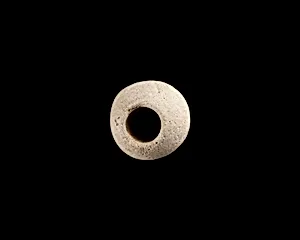
Bead
4th-6th century
Classification
Jewelry and Ornament
Department
Smithsonian Collection
Museum
Smithsonian American Art Museum
Credit
Gift of Charles Lang Freer
Accession Number
F1909.1069
Rights
Public Domain
Tags
About this artwork
To 1909
Art Historical Context
This unassuming yet captivating glass bead hails from the Ancient Near East, dating to the 4th-6th century CE—a period of vibrant cultural exchange under empires like the Sassanids and Byzantines. Classified as jewelry and ornament, it exemplifies the everyday artistry of late antiquity, where small objects like beads served as personal adornments, trade goods, and symbols of status. Glassmaking in this region was a pinnacle of technical skill, often involving intricate techniques such as core-forming or molding, producing durable, colorful pieces that outlasted softer materials. Though its exact form and colors remain a mystery, the bead's survival speaks to the enduring appeal of Near Eastern craftsmanship, which influenced jewelry traditions across Eurasia. Beads like this were strung into necklaces, sewn onto garments, or used in amulets, blending utility with subtle beauty. Acquired by collector Charles Lang Freer by 1909, it entered the Smithsonian American Art Museum as part of his renowned gift. Today, it invites us to ponder the lives of its ancient wearers, bridging millennia through a single, shimmering artifact. (178 words)
About the Artist
Unknown
The artist designated as "Unknown" in our virtual museum's collection exemplifies a poignant chapter in art history: creators whose identities have faded into obscurity despite the enduring power of their work. With only one known artwork attributed to them in our holdings, this figure represents countless anonymous hands that shaped visual culture across centuries. Museums worldwide, including th...