
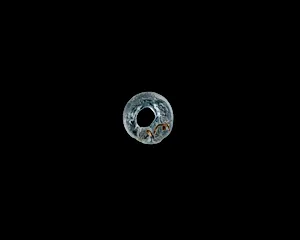
Bead
1550-1196 BCE
Classification
Jewelry and Ornament
Department
Smithsonian Collection
Museum
Smithsonian American Art Museum
Credit
Gift of Charles Lang Freer
Accession Number
F1909.1096
Rights
Public Domain
Tags
About this artwork
To 1909
Art Historical Context
This unassuming yet captivating glass bead hails from ancient Egypt's New Kingdom period (ca. 1539–1075 BCE), a golden age of imperial power, monumental architecture, and refined craftsmanship under pharaohs like Hatshepsut and Ramses II. Dating to around 1550–1196 BCE, it exemplifies the everyday artistry of a civilization renowned for its mastery over materials and symbolism. As part of jewelry and ornaments, such beads adorned necklaces, amulets, and belts, serving both practical and protective roles—warding off evil or honoring deities like Bes or Isis. Crafted from glass—a material Egyptians perfected through innovative techniques like core-forming or molding—this bead highlights their alchemical prowess. Glass production flourished in the New Kingdom, with workshops near royal centers producing vibrant hues from minerals like cobalt and copper. Though small, it reflects the era's blend of utility and beauty, where even humble accessories showcased technical skill and cultural devotion. A generous gift from collector Charles Lang Freer, who acquired it by 1909, this bead entered the Smithsonian American Art Museum's collection, bridging ancient Nile Valley traditions with modern appreciation. Today, it invites us to marvel at Egypt's enduring legacy of ingenuity.
About the Artist
Unknown
The artist designated as "Unknown" in our virtual museum's collection exemplifies a poignant chapter in art history: creators whose identities have faded into obscurity despite the enduring power of their work. With only one known artwork attributed to them in our holdings, this figure represents countless anonymous hands that shaped visual culture across centuries. Museums worldwide, including th...