
Bead
4th century
Classification
Jewelry and Ornament
Department
Smithsonian Collection
Museum
Smithsonian American Art Museum
Credit
Gift of Charles Lang Freer
Accession Number
F1909.1156
Rights
Public Domain
Tags
About this artwork
To 1909
Art Historical Context
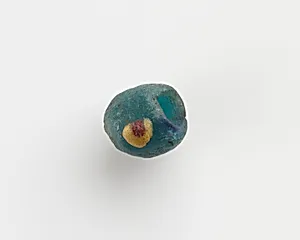
This delicate bead, hailing from 4th-century Syria, exemplifies the artistry of Ancient Near Eastern jewelry traditions. Crafted in mosaic glass—a sophisticated technique where colorful glass segments are fused to create intricate patterns mimicking stone inlays—this small ornament would have adorned personal adornments like necklaces or amulets. Such beads were prized for their vibrant hues and durability, reflecting the region's advanced glassmaking prowess during the late Roman or early Byzantine era. Originating from the fertile cultural crossroads of the Near East, the bead highlights Syria's role as a hub for trade and craftsmanship, where influences from Persia, Rome, and local artisans blended. Glass beads like this were not mere decoration but symbols of status and protection, often exchanged along Silk Road routes. Acquired by collector Charles Lang Freer before 1909 and gifted to the Smithsonian, this piece now graces the Smithsonian American Art Museum's collection. It invites us to marvel at the enduring allure of ancient ingenuity preserved in a tiny, timeless form.
About the Artist
Unknown
The artist designated as "Unknown" in our virtual museum's collection exemplifies a poignant chapter in art history: creators whose identities have faded into obscurity despite the enduring power of their work. With only one known artwork attributed to them in our holdings, this figure represents countless anonymous hands that shaped visual culture across centuries. Museums worldwide, including th...