
Belt Buckle Loop
Unknown Artist
4th–7th century
Medium
Iron, silver inlay
Dimensions
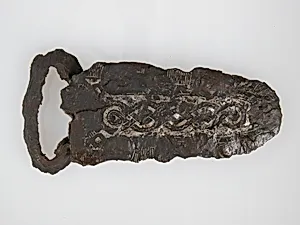
Overall (attached together with x.209.28, .32): 5 11/16 x 2 3/4 x 11/16 in. (14.5 x 7 x 1.8 cm) Overall (loop only): 2 3/4 x 1 9/16 x 1/2 in. (7 x 4 x 1.3 cm)
Classification
Metalwork-Iron
Culture
Frankish
Department
Medieval Art
Museum
Metropolitan Museum of Art, New York, NY
Credit
Museum Accession
Accession Number
X.209.32
Rights
Public Domain
Art Historical Context
This exquisite Belt Buckle Loop, crafted by an unknown Frankish artisan between the 4th and 7th centuries, exemplifies the masterful metalwork of early medieval Europe. Made of iron with intricate silver inlay, it measures about 2¾ x 1½ ½ inches and was likely part of a larger belt ensemble (displayed here with related pieces). Housed in the Metropolitan Museum of Art's Medieval Art Department, it reflects the Frankish people's rise during the Migration Period, as they transitioned from tribal warriors to rulers of a vast kingdom under leaders like Clovis. In Frankish culture, belt buckles were more than functional fasteners—they symbolized status, wealth, and identity. Worn by elites on tunics or cloaks, such ornaments showcased the wearer's prowess and social standing. The silver inlay technique, where fine silver wires or sheets were hammered into incised iron grooves, highlights advanced metallurgical skills honed through trade and conquest. This damascene-like process created shimmering contrasts, making everyday items into wearable art. Today, this modest yet sophisticated loop offers a tangible link to the Merovingian era, revealing how Frankish craftsmen blended Germanic traditions with Roman influences to forge a distinctive aesthetic that paved the way for Carolingian splendor. A testament to enduring craftsmanship!