
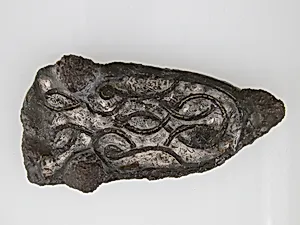
Buckle Plate
Unknown Artist
4th–7th century
Medium
Iron, gold, brass or latten inlay, silver overlay,
Dimensions
Overall: 2 7/8 x 1 7/16 x 3/8 in. (7.3 x 3.7 x 1 cm)
Classification
Metalwork-Iron
Culture
Frankish
Department
Medieval Art
Museum
Metropolitan Museum of Art, New York, NY
Credit
Gift of J. Pierpont Morgan, 1917
Accession Number
17.191.337a
Rights
Public Domain
Art Historical Context
This exquisite **Buckle Plate**, crafted by an unknown Frankish artisan between the 4th 7th centuries, a glimpse into the sophisticated metalworking of early medieval Europe. Hailing from the Meroving period—when the Franks rose to dominate Gaul (modern France)—such buckles adorned belts or harnesses, serving both practical and status-driven purposes. Measuring a modest 2 7/8 x 1 7/16 x 3/8 inches, its small scale belies its cultural weight as a symbol of elite craftsmanship amid the turbulent transition from late antiquity to the Middle Ages. The plate's iron core is masterfully enhanced with gold, brass or latten inlays, and silver overlays, showcasing advanced techniques like cloisonné-style inlaying and contrasting metal applications. These methods created shimmering, durable designs that highlighted the wearer's wealth and Frankish ingenuity in blending utilitarian iron with precious metals. Iron, abundant yet challenging to decorate, was elevated here into art, reflecting a fusion of Germanic traditions and Roman influences. A generous gift from J. Pierpont Morgan in 1917, this piece now resides in The Metropolitan Museum of Art's Medieval Art department. It reminds us how everyday objects from 1,500 years ago carried profound stories of power, trade, and artistry in a warrior society.