
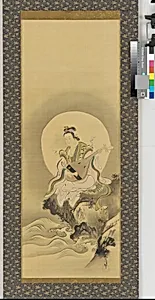
Benten (<em>Sarasvati</em>) seated on a rock
mid 17th-early 18th century
Classification
Painting
Department
Smithsonian Collection
Museum
Smithsonian American Art Museum
Credit
Gift of Charles Lang Freer
Accession Number
F1904.376
Rights
Public Domain
Tags
About this artwork
To 1904
Art Historical Context
In the serene world of Edo-period Japan (1615–1868), Kano Tsunenobu (1636–1713), a master of the prestigious Kano school, crafted this captivating painting of Benten—Japan's beloved manifestation of the Hindu goddess Sarasvati—seated gracefully on a rock. Dating to the mid-17th to early 18th century, the artwork embodies the school's signature style: bold, fluid brushstrokes, vibrant colors, and a harmonious blend of natural elements with divine figures. Benten, goddess of music, eloquence, and flowing waters, is often shown with her biwa lute, symbolizing artistic inspiration and the rhythmic beauty of life. This depiction highlights Benten's cultural importance as one of the Seven Lucky Gods (Shichifukujin), revered for prosperity and the arts during Japan's peaceful Tokugawa era. Kano artists like Tsunenobu served the shogunate elite, producing works that decorated palaces and temples with their dynamic compositions and symbolic depth. Seated on a rock amid watery realms, Benten evokes her sacred island shrines, inviting viewers to contemplate nature's poetry and creative divinity. A cherished gift from collector Charles Lang Freer, this painting graces the Smithsonian American Art Museum, offering a window into Japan's Edo artistic golden age and the timeless allure of its pantheon.