
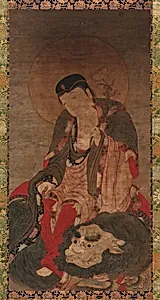
Manjusri
1279-1644
Classification
Painting
Department
Smithsonian Collection
Museum
Smithsonian American Art Museum
Credit
Gift of Charles Lang Freer
Accession Number
F1916.190
Rights
Public Domain
Tags
About this artwork
To 1916
Art Historical Context
Behold the serene depiction of *Manjusri*, the Bodhisattva of Wisdom, in this exquisite Chinese painting from the Yuan1279–1368) or Ming (1368–1644) dynasty. Created by an unknown artist, it captures a pivotal figure in Mahayana Buddhism, revered for embodying transcendent knowledge and compassion. Such artworks flourished during these dynasties, when Buddhist iconography blended with evolving Chinese artistic traditions, often emphasizing spiritual harmony amid imperial patronage. Key symbols adorn the composition: a radiant halo signifying, a majestic lion asjusri's mount symbolizing fearless wisdom, and a lotus flower evoking purity rising from worldly attachments. Though the medium remains unidentified, its classification as a painting aligns with the era's masterful use of ink and pigment on silk or paper, showcasing refined brushwork that conveys both dynamism and introspection. A cherished gift from collector Charles Lang Freer, acquired by 1916, this piece graces the Smithsonian American Art Museum's collection. It offers visitors a window into ancient China's spiritual legacy, inviting reflection on wisdom's timeless pursuit. (178 words)
About the Artist
Unknown
The artist designated as "Unknown" in our virtual museum's collection exemplifies a poignant chapter in art history: creators whose identities have faded into obscurity despite the enduring power of their work. With only one known artwork attributed to them in our holdings, this figure represents countless anonymous hands that shaped visual culture across centuries. Museums worldwide, including th...