
Bill (Ronca)
16th century
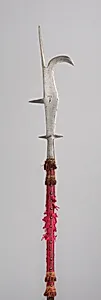
Medium
Steel, wood (oak), brass, and damask
Dimensions
H.: 228.6 cm (90 in.); Blade and socket: H.: 59.7 cm (23 1/2 in.)
Classification
edged weapon-staff
Department
Applied Arts of Europe
Museum
Art Institute of Chicago
Accession Number
116273
Rights
Public Domain
Art Historical Context
This 16th-century bill, also known as a ronca, is a remarkable staff weapon from the Applied Arts of Europe collection. Crafted by an unknown artisan, it stands nearly 7.5 feet tall, with a steel blade and socket of about 23.5 inches mounted on an oak shaft, accented by brass fittings and damask elements. As an edged polearm, it exemplifies the blend of utility and craftsmanship typical of European arms during this era. Polearms like this bill were vital in 16th-century warfare, giving infantry soldiers greater reach for slashing, hooking, and thrusting against armored foes. The combination of durable oak wood for the shaft and high-quality steel for the blade highlights practical engineering, while brass and damask details suggest decorative refinement that elevated functional objects into applied art. Today, this piece offers insight into Renaissance martial culture, where weapons were not only tools of conflict but also displays of skilled metalworking and woodworking. Its imposing scale and mixed materials invite visitors to imagine the strength and precision required both to wield it in battle and to create such a balanced, enduring artifact.
About the Artist
Unknown
The artist designated as "Unknown" in our virtual museum's collection exemplifies a poignant chapter in art history: creators whose identities have faded into obscurity despite the enduring power of their work. With only one known artwork attributed to them in our holdings, this figure represents countless anonymous hands that shaped visual culture across centuries. Museums worldwide, including th...