
Border
1575/1625
Medium
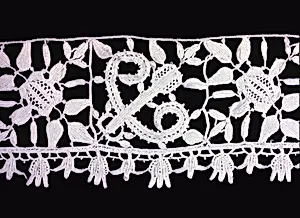
Linen, needle lace worked on a laid and plaited thread grid with detached points
Dimensions
8.5 × 125.7 cm (3 3/8 × 49 1/2 in.); Repeat: W.: 12.2 cm (4 3/4 in.)
Classification
textile
Department
Textiles
Museum
Art Institute of Chicago
Accession Number
105983
Rights
Public Domain
Art Historical Context
This exquisite *Border* from the Art of Chicago, dating between 1575 and 1625, is a masterful example of early needle lace crafted from linen. Measuring a slender 8.5 × 125.7 cm with a repeating motif every 12.2 cm, this long, narrow strip was likely designed as a decorative edging for elite garments, altar cloths, or furnishings during the Renaissance-to-Baroque transition. technique—needle lace worked on a laid and plaited thread grid with detached points—represents a pinnacle of 16th- and 17th-century lacemaking innovation. Artisans first created a structured grid of threads, then stitched intricate patterns freehand with a needle, building openwork designs that mimicked floral or geometric motifs without a rigid bobbin foundation. This labor-intensive method, flourishing in centers like Flanders and Italy, allowed for fluid, sculptural forms that showcased virtuosity and patience. As a status symbol for nobility and clergy, such lace borders embodied opulence and piety in an era when textiles rivaled jewels in prestige. Though the artist remains unknown, this piece highlights the anonymous craftswomen whose skill elevated everyday linen into high art, inviting us to marvel at their delicate legacy preserved through centuries.
About the Artist
Unknown
The artist designated as "Unknown" in our virtual museum's collection exemplifies a poignant chapter in art history: creators whose identities have faded into obscurity despite the enduring power of their work. With only one known artwork attributed to them in our holdings, this figure represents countless anonymous hands that shaped visual culture across centuries. Museums worldwide, including th...