
Border
1715/25
Medium
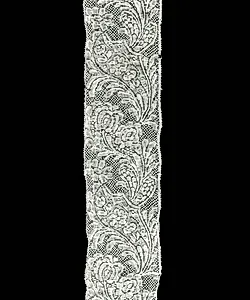
Linen, bobbin straight lace of a type known as "Valenciennes" with a five hole mesh ground
Dimensions
6 × 124.6 cm (2 3/8 × 49 in.); Repeat: W.: 11.6 cm (9 5/8 in.)
Classification
textile
Department
Textiles
Museum
Art Institute of Chicago
Accession Number
50320
Rights
Public Domain
Art Historical Context
This exquisite *Border* lace, dating to around 1715–25, exemplifies the pinnacle of early 18th-century textile artistry from the Valenciennes region in France or the southern Netherlands. Crafted from fine linen using the bobbin lace technique, narrow strip—measuring just 6 × 124.6 cm—features a repeating pattern 11.6 cm wide, designed as an elegant edging for garments, linens, or furnishings. Valenciennes lace, prized for its delicacy, was a luxury good symbolizing wealth and refinement during the Regency period in France. The "straight lace" method, woven seamlessly without joins, and its signature five-hole mesh ground create a lightweight, durable fabric with intricate openwork that allows light to dance through the threads. Bobbin lacemaking demanded extraordinary skill: artisans twisted and plaited dozens of bobbins by hand, forming floral motifs and geometric designs that captured the emerging Rococo aesthetic of graceful curves and nature-inspired elegance. Housed in the Art Institute of Chicago's Textiles Department, this anonymous masterpiece highlights the anonymous genius of laceworkers, whose labor-intensive craft rivaled painting in precision. It offers visitors a tactile glimpse into the opulent world of 18th-century fashion, where such borders adorned the elite's wardrobes, blending utility with breathtaking artistry.
About the Artist
Unknown
The artist designated as "Unknown" in our virtual museum's collection exemplifies a poignant chapter in art history: creators whose identities have faded into obscurity despite the enduring power of their work. With only one known artwork attributed to them in our holdings, this figure represents countless anonymous hands that shaped visual culture across centuries. Museums worldwide, including th...