
Border
19th century
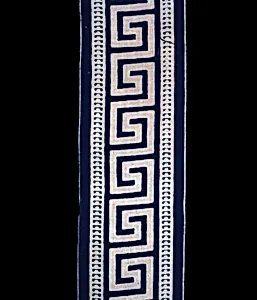
Medium
Cotton, plain weave; block printed
Dimensions
41.6 × 7.2 cm (16 3/8 × 2 7/8 in.); Warp repeat: H.: 3.2 cm (1 1/4 in.)
Classification
textile
Department
Textiles
Museum
Art Institute of Chicago
Accession Number
52945
Rights
Public Domain
Art Historical Context
This delicate textile fragment, titled *Border*, hails from the 19 century and exemplifies the artistry of block printing on cotton plain weave. Measuring a slender 41.6 × 7.2 cm, with a warp repeat of just 3.2 cm, it was likely designed as a decorative for garments, curtains, or household linens. Its narrow form suggests versatility in everyday use, transforming ordinary fabrics into elegant accents during an era when mass-produced textiles were revolutionizing home life. Block printing, the technique used here, involved carving intricate patterns into wooden blocks, inking them, and stamping them onto the fabric by hand—a labor-intensive method that persisted alongside emerging industrial processes. Cotton plain weave provided a smooth, durable canvas ideal for bold motifs and vibrant dyes, making such borders affordable yet sophisticated. Though the artist remains unknown, this piece reflects the global trade in printed textiles, blending craftsmanship with the era's growing demand for patterned goods. Housed in the Art Institute of Chicago's Textiles Department, *Border* invites us to appreciate the unsung beauty of utilitarian art. Its repeating design whispers of cultural exchanges across continents, reminding visitors how 19th-century innovations in fabric turned the mundane into the magnificent.
About the Artist
Unknown
The artist designated as "Unknown" in our virtual museum's collection exemplifies a poignant chapter in art history: creators whose identities have faded into obscurity despite the enduring power of their work. With only one known artwork attributed to them in our holdings, this figure represents countless anonymous hands that shaped visual culture across centuries. Museums worldwide, including th...