
Border Fringe
1850/1900
Medium
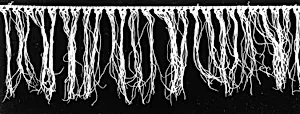
Linen, macramé; cut fringe
Dimensions
11.3 × 336.4 cm (4 1/2 × 132 1/2 in.)
Classification
textile
Department
Textiles
Museum
Art Institute of Chicago
Accession Number
26092
Rights
Public Domain
Art Historical Context
This exquisite *Border Fringe*, crafted between 1850 and 1900, exemplifies the intricate textile arts of the Victorian era. Measuring a slender 11.3 × .4 cm (4½ × 132½ in.), its elongated form suggests it served as a decorative trim for curtains, table linens, or bed hangings in affluent homes. Made from linen using macramé—a knotting technique that creates openwork patterns without a loom—and finished with cut fringe, it highlights the patience and skill required for such handiwork. Macramé flourished in the 19th century as a popular pastime, particularly among women, blending utility with ornamentation. This piece reflects the era's fascination with elaborate domestic textiles, influenced by global trade that introduced knotted motifs from the Middle East and sailors' crafts. The linen's durability and the fringe's tactile appeal added both elegance and functionality, warding off dust while enhancing interiors. Housed in the Art Institute of Chicago's Textiles Department, *Border Fringe* preserves an anonymous artisan's mastery, underscoring textiles' role in everyday artistry. Though its maker remains unknown, it invites us to appreciate the quiet sophistication of 19th-century needlework, bridging craft and fine art.
About the Artist
Unknown
The artist designated as "Unknown" in our virtual museum's collection exemplifies a poignant chapter in art history: creators whose identities have faded into obscurity despite the enduring power of their work. With only one known artwork attributed to them in our holdings, this figure represents countless anonymous hands that shaped visual culture across centuries. Museums worldwide, including th...