
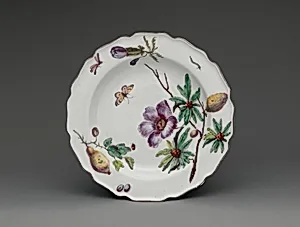
Botanical plate with a tropical specimen
ca. 1755
Medium
Soft-paste porcelain
Dimensions
Overall (confirmed): 1 7/16 × 9 × 9 in. (3.7 × 22.9 × 22.9 cm)
Classification
Ceramics-Porcelain
Culture
British, Chelsea
Department
European Sculpture and Decorative Arts
Museum
Metropolitan Museum of Art, New York, NY
Credit
Purchase, Bequest of Alfred Duane Pell, by exchange, John Stewart Kennedy Fund, by exchange, and Gift of Mr. and Mrs. Luke Vincent Lockwood, by exchange, 2016
Accession Number
2016.218
Rights
Public Domain
Tags
Art Historical Context
This exquisite botanical plate from the Chelseacelain Manufactory, 1755, showcases the height of British ceramic artistry in the mid-18th century.ed in soft-paste porcelain—aable yet luminous material that mimicked prized Chinese hard-paste porcelain before Britain's own formula was perfected—the 9-inch square plate depicts a tropical specimen alive with intricate details of flowers, butterflies, and insects. These naturalistic motifs, rendered in vibrant enamels, reflect the Rococo era's fascination with nature's bounty, evoking lush gardens and exotic explorations. Chelsea, London's pioneering porcelain factory (active 1743–ca. 1770), was renowned for such decorative wares, often marked with a raised gold anchor. Soft-paste allowed for delicate modeling and overglaze painting, techniques that brought hyper-realistic textures to petals, wings, and stems, blurring the line between art and nature. These plates were prized by affluent collectors as both functional centerpieces and conversation starters, symbolizing Enlightenment-era curiosity about botany and global trade. Today, housed in The Metropolitan Museum of Art's European Sculpture and Decorative Arts collection, this piece highlights Chelsea's role in elevating British porcelain to rival European masters like Meissen, offering visitors a tangible glimpse into 18th-century opulence and scientific wonder.
About the Artist
Chelsea Porcelain Manufactory · 1744–1784
**Chelsea Porcelain Manufactory** The Chelsea Porcelain Manufactory, Britain's pioneering porcelain enterprise, was founded around 1743 in Chelsea, London, by two Huguenot silversmiths: Nicholas Sprimont from Liège and Charles Gouyn. Sprimont, trained in Paris as a goldsmith before immigrating to England, brought his expertise in luxury metalwork to the venture, while Gouyn handled early sales th...