
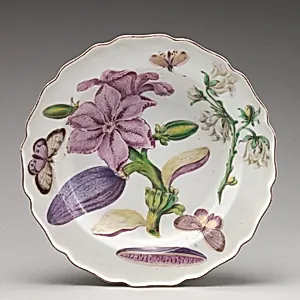
Botanical plate with a flowering eggplant
ca. 1755
Medium
Soft-paste porcelain with enamel decoration
Dimensions
Overall (confirmed): 1 3/8 × 9 1/16 × 9 1/16 in., 1 lb. (3.5 × 23 × 23 cm, 0.5 kg)
Classification
Ceramics-Porcelain
Culture
British, Chelsea
Department
European Sculpture and Decorative Arts
Museum
Metropolitan Museum of Art, New York, NY
Credit
Purchase, Gift of Mr. and Mrs. William Jaffe, by exchange, Gift of James A. Moffett, by exchange, Tomasso Brothers Fine Art Gift, Fletcher Fund, by exchange, Bequest of Annie C. Kane, by exchange, and funds from various donors, 2016
Accession Number
2016.220
Rights
Public Domain
Tags
Art Historical Context
This delicate botanical plate from the Chelsea Por Manufactory, created around 1755, exemplifies the golden age of British porcelain production. Made of soft-paste porcelain—a, creamy body developed as an affordable alternative to rare hard-paste from China—the plate features exquisite enamel decoration depicting a flowering eggplant (aubergine) and fluttering butterflies. Measuring just over 9 inches in diameter, it likely part of a luxurious dinner service or display set, showcasing the factory's mastery in mimicking nature's intricacies. Chelsea, founded in 1743 near London, rivaled European leaders like Meissen with its naturalistic motifs inspired by exotic imports and botanical illustrations. The overglaze enamels, fired at low temperatures, allowed vibrant colors and fine details on the glossy surface, highlighting the eggplant's exotic purple blooms—a nod to the plant's introduction to Europe from Asia, symbolizing opulence in Rococo-era dining. Butterflies add whimsy, evoking the era's fascination with the natural world amid growing scientific curiosity. Today, at The Metropolitan Museum of Art, this plate reveals 18th-century innovation in ceramics, blending artistry with technical prowess to bring the garden indoors for elite collectors.
About the Artist
Chelsea Porcelain Manufactory · 1744–1784
**Chelsea Porcelain Manufactory** The Chelsea Porcelain Manufactory, Britain's pioneering porcelain enterprise, was founded around 1743 in Chelsea, London, by two Huguenot silversmiths: Nicholas Sprimont from Liège and Charles Gouyn. Sprimont, trained in Paris as a goldsmith before immigrating to England, brought his expertise in luxury metalwork to the venture, while Gouyn handled early sales th...