
Bottle
Unknown Artist
probably 18th–19th century
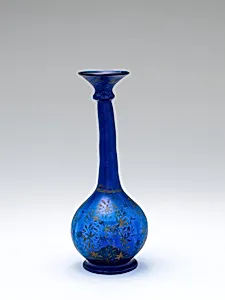
Medium
Glass; mold blown and gilded, tooled on the pontil
Dimensions
H. 10 5/8 in. (27 cm) Max. Diam 4 5/16 in. (10.9 cm)
Classification
Glass
Department
Islamic Art
Museum
Metropolitan Museum of Art, New York, NY
Credit
Edward C. Moore Collection, Bequest of Edward C. Moore, 1891
Accession Number
91.1.1585
Rights
Public Domain
Art Historical Context
This elegant glass bottle, likely crafted in the 18th or 19th century, the refined artistry of Islamic glassmaking traditions. Standing at 10⅝ inches tall with a maximum diameter of ¼ inches, it served practical yet decorative purposes—perhaps for perfumes, oils, or rosewater—in households across the Islamic world, from the Ottoman Empire to Persia. Such vessels highlight the period's blend of functionality and opulence, where everyday objects became canvases for skilled craftsmanship. The bottle's medium reveals sophisticated techniques: mold-blown glass created textured patterns by inflating molten glass into a patterned mold, yielding intricate designs without painting. Gilding added a luxurious golden sheen, while the tooled pontil—a mark from the glassblower's rod—shows careful finishing for stability and aesthetics. These methods underscore Islamic artisans' mastery of glass, rivaling Europe's finest wares and emphasizing transparency, luster, and form. Part of the Metropolitan Museum of Art's Islamic Art collection, gifted through Edward C. Moore's 1891 bequest, this anonymous work invites us to appreciate the unsung makers whose innovations influenced global decorative arts. A testament to enduring elegance!