
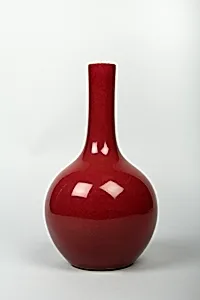
Bottle
Unknown Artist
Medium
Porcelain with red glaze
Dimensions
H. 10 3/4 in. (27.3 cm); Diam. 6 1/4 in. (15.9 cm)
Classification
Ceramics
Culture & Period
China · Qing dynasty (1644–1911), Yongzheng period (1723–35)
Department
Asian Art
Museum
Metropolitan Museum of Art, New York, NY
Credit
H. O. Havemeyer Collection, Bequest of Mrs. H. O. Havemeyer, 1929
Accession Number
29.100.320
Rights
Public Domain
Art Historical Context
This elegant porcelain bottle from China's Qing dynasty, specifically the Yongzheng period (1723–35), exemplifies the era's mastery of ceramic artistry. Standing at 10¾ inches tall with a 6¼-inch diameter, its sleek form and vibrant red glaze highlight the imperial kilns' technical prowess, likely produced at Jingdezhen, the renowned center of porcelain production. The monochromatic red glaze, achieved through precise control of firing temperatures and copper oxide, creates a rich, lustrous surface that was highly prized in the imperial court for its rarity and beauty. During the Yongzheng reign, Emperor Yongzheng's patronage spurred innovations in porcelain, emphasizing refined simplicity and subtle elegance over ornate decoration. This bottle, unadorned yet striking, reflects that aesthetic shift, serving possibly as a decorative vessel or for holding precious liquids like wine or oils. Red-glazed wares symbolized luxury and were often reserved for elite collections, underscoring China's global influence in ceramics. Acquired through the H. O. Havemeyer Collection and now in the Metropolitan Museum of Art's Asian Art department, this piece offers a glimpse into 18th-century Chinese sophistication, inviting visitors to appreciate the harmony of form, color, and craftsmanship.