
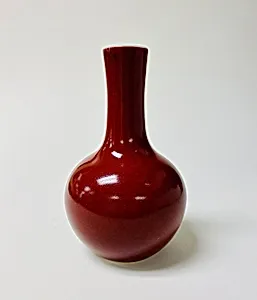
Bottle vase
Unknown Artist
18th century
Medium
Porcelain with copper red glaze (Jingdezhen ware)
Dimensions
H. 7 in. (17.8 cm); Diam. 4 1/4 in. (10.8 cm)
Classification
Ceramics
Culture & Period
China · Qing dynasty (1644–1911)
Department
Asian Art
Museum
Metropolitan Museum of Art, New York, NY
Credit
Bequest of Benjamin Altman, 1913
Accession Number
14.40.80
Rights
Public Domain
Art Historical Context
This elegant bottle vase, crafted in the 18th century during China's Qing dynasty (16441911), exemplifies the porcelain production of Jingdezhen, the premier center for imperial ceramics. Standing at 7 inches tall with a 4¼-inch diameter, its slender form—reminiscent of a bottle shape—was ideal for displaying flowers or as a decorative accent in scholarly studios or elite homes. The rich copper red glaze, a hallmark of Qing artistry, shimmers with a deep, oxblood hue achieved through precise firing techniques using copper oxide. Jingdezhen kilns, under imperial patronage, perfected this challenging glaze during the 18th century, when potters vied to replicate the translucent reds favored by emperors like Kangxi and Qianlong. The process demanded exact temperatures to avoid muddy greens or dull blacks, making successful pieces rare and highly prized. This vase reflects the dynasty's opulent aesthetic, blending technical innovation with subtle elegance. Now housed in the Metropolitan Museum of Art's Asian Art Department through the 1913 bequest of collector Benjamin Altman, it invites visitors to appreciate the enduring legacy of Chinese porcelain—symbols of refinement that influenced global tastes for centuries.